Raising Cats Is Exhausting Graphics & T-Shirt Designs
The Emotional Hook: Why This Design Connects Immediately
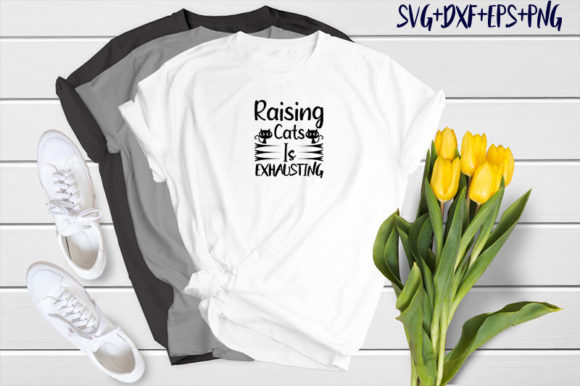
The first time I opened the Raising Cats is Exhausting graphic, I knew it wasn’t just another cat pun. The typography has a worn, almost confessional weight—like a hand-lettered diary entry that every cat owner has scrawled at 3 a.m. The mood straddles humor and exhaustion, which is precisely what makes it such a powerful graphic design asset for client work. It doesn’t try to be cute or overly polished; it resonates because it’s true. For a commercial project targeting pet lovers, that authenticity is everything.
Imagining the Real Client: A Boutique Line for the Obsessed Cat Parent
When I first assessed this creative design, I immediately pictured a client I’ve worked with before—a small handmade business specializing in sustainable pet accessories and lifestyle merch. Their brand voice is witty, self-aware, and deeply rooted in the chaos of daily life with rescue cats. They needed a hero graphic for a t-shirt design ahead of a local adoption event. Raising Cats Is Exhausting wasn’t just a placeable file; it was a message that could glue their entire campaign together. The graphic would live on crewnecks, tote bags, drinkware, and even as a playful decal for their point-of-sale display. As a digital product, it gave me a ready-to-personalize centerpiece that felt far more thoughtful than generic clipart.
Breaking Down the Visual Assets: What You’re Actually Getting
Unzipping the folder, you immediately see the value: the package includes SVG, DXF, EPS, and PNG formats. For a working designer, this means coverage across almost any workflow. The SVG design file is the true workhorse—scalable, layer-friendly, and a must-have for any Cricut project or vinyl decal work. The DXF format opens cleanly in Silhouette Studio, making it effortless for crafters who want a seamless cut. The EPS is ready for professional offset print, and the high-resolution PNG with transparency lets me drop the graphic straight into a product mockup for client approval without any background fuss. I treated the PNG as a printable design asset right away, testing it across paper crafts, sticker sheets, and sublimation blanks. The whole bundle feels like a commercial design toolkit, not just a single-use file.
Prime Applications Where the Asset Excels
In real client work, versatility separates a trendy graphic from a genuinely useful design asset. This one finds its stride in narrative-driven merchandise. On a unisex t-shirt, a centered chest print reads like a statement piece; scaled larger on the back, it turns into a conversation starter. The aesthetic also translates beautifully into:
- Sticker design for water bottles and laptop covers—the distressed type survives die-cutting without losing character.
- Mugs and tote bags where the humorous confession aligns with morning coffee rituals or grocery runs.
- Social media graphics for Instagram posts and Pinterest pins, especially when paired with candid pet photography.
- Packaging design for cat treat samplers or handmade toys, giving the unboxing a playful, relatable voice.
- Invitations and event flyers for cat café openings, adoption drives, or fundraisers—the phrase softens the formal tone.
- Editorial design for pet column headers or blog visuals, where it reinforces a personal, warm editorial style.
- Scrapbooking and paper crafting layered over patterned backgrounds for memory books.
For a cohesive brand identity, this graphic works best as a secondary element—a recurring badge that supports the core logo without competing with it.
When to Exercise Restraint: Projects That Should Skip This Graphic
No graphic design asset suits every brief, and I would strongly caution against using Raising Cats Is Exhausting in more rigid visual environments. The hand-drawn, slightly fatigued lettering clashes with minimalist luxury branding or anything that demands a sterile, corporate feel. I tested it on a sleek black business card for a law firm—just as an experiment—and the contrast in tone was jarring. Additionally, the text length becomes a visual hierarchy problem at thumbnail sizes; if your project lives on a mobile screen at 200 pixels wide, legibility will suffer. Stick to applications where the phrase has breathing room. Similarly, low-contrast backgrounds (like a pale gray shirt with a faint pink print) can wash out the texture, so always test on both light and dark fabric options.
I also wouldn’t recommend this as a primary logo design unless the brand is intentionally comedic and ephemeral. Logos need to simplify—this graphic tells a story, and in a stacked emblem it would lose its charm. Use it instead for marketing visuals, campaign assets, or limited-edition merchandise that can embrace its personality fully.
Designer’s Pre-Flight Checklist: Testing for Professional Results
Before I deliver any client project using this digital product, I run through a practical checklist that catches most production headaches early. Here’s what I did with Raising Cats Is Exhausting:
- Vector integrity: Opened the SVG in Adobe Illustrator and checked for broken paths, odd groupings, or raster traces. The design was cleanly constructed, with outlined text that removed font dependency.
- Color conversion: Tested black‑and‑white prints. The distressed texture retained character in greyscale, a good sign for single‑color screen printing.
- Mockup realism: Applied the graphic to a high‑resolution product mockup for a Gildan tee, then a mug, then a canvas tote. Checked scale, bleed, and how the edges interact with fabric folds.
- Contrast audits: Placed the transparent PNG on charcoal, navy, and maroon backgrounds. The design popped on darker solid grounds; on heather gray, it needed a slight outline offset to keep the tired eyes visible.
- Small‑scale tests: Reduced to 1.5‑inch width for a sticker mockup. The main text remained readable, though finer textures started to vanish. At 1 inch, I’d advise a simplified version.
- Machine compatibility: Loaded the DXF into Silhouette Studio and performed a test cut on vinyl. Weeding was straightforward, and the reversed weeded companion looked just as expressive.
For crafters and small business owners who rely on print‑on‑demand services, I additionally recommend uploading the file to platforms like Printful or Printify to preview the automated mockup. This reveals any unexpected positioning issues and confirms the graphic’s print‑ready status before you invest in samples.
Commercial Licensing: Protecting Your Client and Your Work
One of the first conversations I have with clients about external design assets centers on licensing. Raising Cats Is Exhausting comes from a creative marketplace, and while the included formats suggest broad compatibility, the commercial license terms are never automatic. I always flag three points:
- Print-on-demand use: Verify if the license permits physical end products for sale. Most standard licenses allow up to a certain number of units; exceeding that requires an extended license.
- Logo and brand identity: Unless explicitly permitted, avoid using the graphic as a standalone logo or trademark element. The client could run into ownership disputes later.
- Digital redistribution: If you plan to resell the design as part of a design bundle or editable Canva template, check the original seller’s terms. Flattened, non‑extractable usage is often the safe route.
I store a copy of the license file in my project folder and note any attribution requirements in the client’s brand guidelines. That small step preserves trust and keeps the final Etsy product or e‑commerce listing legally clean.
Final Design Judgment: A Niche Asset That Delivers
From a professional standpoint, Raising Cats Is Exhausting is a well‑executed graphic design asset that knows its audience and delivers exactly what cat‑centric brands need. It’s not a universal solution, and I wouldn’t shoehorn it into a formal corporate identity or a minimalist lifestyle blog. But for a t‑shirt design, a pet‑themed brand identity accent, or a campaign for a handmade business, it earns its place in the asset library. The file bundle is generous, the typographic treatment is authentic, and the emotional shorthand bypasses the need for lengthy copywriting. In client presentations, seeing this graphic on a mug or a worn‑in tee almost always prompts a smile—and that’s a conversion metric no A/B test can capture. If your project thrives on genuine, self‑deprecating humor and you respect the technical boundaries I’ve outlined, Raising Cats Is Exhausting will become one of those quiet workhorses that makes your small business branding feel both lived‑in and polished.