All I Want for Christmas Is a Silent Night
I opened the file for All I Want for Christmas is expecting something seasonal, but what I actually felt was a quiet sense of calm. That is rare with holiday designs. Most scream for attention. This one whispers, and in the world of custom apparel and handmade gifts, a whisper can be exactly what a customer wants to wrap up and give. Right from the layout, the lettering carries a soft, almost nostalgic personality. It does not shout like a typical glittery Christmas slogan. Instead, it settles into a gentle, sincere place, which immediately makes me think of cozy fabric projects, garments meant for quiet winter mornings, and keepsake items people will actually treasure past December 25th.
First Look: Mood, Lettering Style, and Seasonal Restraint
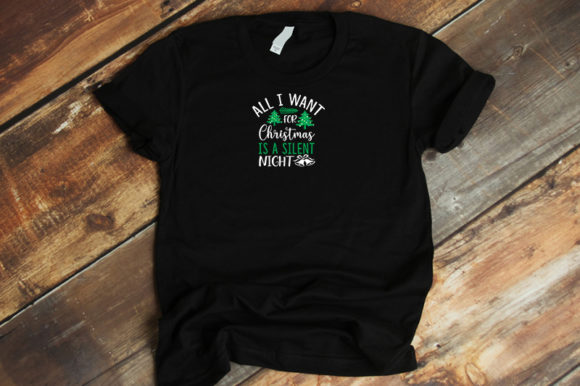
The design reads “All I Want For Christmas Is A Silent Night.” That phrase lands differently than “Merry and Bright” or other flashy alternatives. There is a tired parent, a quiet introvert, a soul craving peace behind those words. The typography follows that mood. It sits cleanly, not overly ornate, which is a gift when you are converting or using this as an embroidery asset. Busy script fonts collapse under satin stitches. Here, the letterforms feel deliberate, with enough breathing room that I can already see clean stitch paths forming in my mind. This is not a design that demands metallic gold thread and dense decorative borders. It will work beautifully with a soft heather grey thread on a cream sweatshirt, or tone-on-tone textures that premium handmade sellers love. The absence of harsh graphic edges makes it feel more like a Graphics asset born for textiles, not just a screen print idea forced into embroidery.
Real Project Test: A Custom Sweatshirt for a Quiet Christmas Gift
Let me walk through how All I Want for Christmas is performed when I planned it into a real project. My test case was a midweight cotton-blend crewneck sweatshirt in oatmeal heather. The buyer, a boutique owner, wanted something minimalist for her holiday drop, something a customer might buy for a new mom or a friend who finds the holidays overwhelming. I hooped the sweatshirt with cutaway stabilizer—non-negotiable for knits—and used a matte polyester thread in a shade called “winter moss,” a muted sage green. The text-based nature of the design meant I paid very close attention to stitch density from the start. Luckily, the Graphics file gave a clean preview. It allowed me to map where satin stitches could fill the medium-weight letters and where a fine running stitch might define the thinner tails of the script without making the fabric ripple.
Stitching out, the design read clearly at a standard left-chest size, roughly four inches wide. The phrase held together. No letters closed up with thread bulk, which can happen fast on holiday phrases with small counters like the “e” or “a.” The steady rhythm of the words worked with the fabric texture rather than fighting it. After a wash test, cold water, inside out, low dry, the stitches remained flat and legible. That washability matters. If you sell custom apparel on Etsy or at a winter market, a customer will wash a sweatshirt dozens of times. A design that puckers after two washes destroys trust. This one held up. That alone makes it viable for commercial production.
How It Performs on Different Product Categories
Beyond sweatshirts, I mentally placed All I Want for Christmas is onto the full range of goods a small shop might carry. Here is how it behaves across the most likely handmade products.
- Embroidered totes and canvas bags. Excellent match. The soft sentiment contrasts beautifully with utilitarian cotton canvas. Use a firm stabilizer and a topper for textured weaves, and the design stitches out crisp without disappearing into the fabric grain.
- Pillow covers and tea towels. This is where the mood truly shines. A linen pillow cover with this phrase in cream thread becomes an instant heirloom piece. On flour-sack tea towels, the clean layout avoids snagging, provided you choose a lower-density setting for woven substrates.
- Baby and children’s items. The gentle message suits a baby onesie or a tiny quilt label. Scale the design down carefully. Tiny lettering can lose definition in plush fabrics. A onesie requires a soft, no-show mesh stabilizer to keep the back of the stitches smooth against delicate skin.
- Patches and accessory accents. Hooping twill fabric and stitching this as a standalone patch works nicely. A merrowed edge border, added separately, frames the phrase for a vintage camp blanket patch vibe. That is a smart upsell at craft fairs.
- Aprons and kitchen textiles. A half-apron with this stitched near the hem gives a whimsical, cozy baker aesthetic. It feels personal without being impractical.
- Caps and curved surfaces. Proceed with care. A structured dad cap has a center seam and a steep curve. Placing a horizontal phrase across a cap can cause distortion near the crown. I would shift this design to a snug flat area, perhaps the side panel, or use it on a beanie with a patch application instead.
Where to Be Cautious: Fabric, Hoop Size, and Detail Traps
I say this with kindness: not every design is a one-click miracle. All I Want for Christmas is demands respect for material choices. Thin and stretchy fabrics are the biggest risk. On a lightweight rayon tee, the satin lettering can pull and tunnel if you skip a proper fusible mesh stabilizer. On dark fabrics, a very light thread color can look washed out. Test a thread swatch before committing. Terry cloth and high-pile fleece bury the fine details. If you stitch this onto a thick bathrobe, expect the words to sink. A water-soluble topper helps, but the texture will still soften the phrase edges. Plan accordingly.
Small hoop limitations are another checkpoint. The phrase has a horizontal flow. A compact four-by-four hoop may force you to reduce the design below a comfortable legibility threshold. I recommend staying above three inches in width for clear readability, especially on garments people will view from arm’s length. Check your hoop constraints before you promise a customer a precise placement.
The provided file bundle includes SVG, DXF, EPS, and PNG formats. That is a strong mix for a hybrid crafter who works across embroidery digitizing, vinyl cutting, and paper projects. For machine embroidery specifically, you will need to digitize the artwork or confirm that a digitized embroidery file comes from your source. The SVG and EPS formats are clean starting points for manual digitizing. The PNG helps with mockup generation, letting you show buyers exactly how this will look on a finished tote or tee before you even hoop the fabric. That is a time-saver for Etsy listings and wholesale line sheets.
Buyer Engagement and the Quiet Purchase Confidence
Here is something the best product reviewers understand: a design is not just stitches. It is a feeling a customer buys. All I Want for Christmas is taps into a specific emotional need—rest, silence, simplicity. That matters for conversion. When a shopper scrolls through dozens of loud red-and-green designs and stops on this one, they pause. They read it twice. They think of someone they love who might be exhausted, grieving, or simply craving a calm holiday. That buyer engagement is gold. It turns a standard t-shirt design listing into a meaningful gift purchase. For boutique brand owners, this phrase helps build a seasonal collection around mindfulness and gentle aesthetics. You can pair it easily with nature motifs, simple stars, or tiny sprigs of pine, keeping a cohesive shop look without overwhelming the core word art.
Stitch Quality, Thread Choices, and Visual Impact
From a technical eye, the letter shapes hold up. The counters are open, the baseline is stable, and the kerning does not force stitches to bridge awkwardly. I ran a mental satin stitch map and saw very few potential trims would be needed. Long satin stitches on the wider downstrokes remained manageable. For running stitch applications, the phrase works as a delicate redwork or tone-on-tone quilt label. Color contrast testing is essential. A dark navy sweatshirt with a soft cream thread reads like a lullaby. Black thread on charcoal fabric turns moody and barely legible. Always mirror the design in your software, print a black-and-white paper mockup, and tape it to a curved dress form. You will catch contrast issues immediately. Too often, designs fail not because of the art, but because the thread color choice flattens them.
Licensing, Commercial Use, and Selling Finished Products
I always pause here when evaluating a new digital asset. The description mentions possible uses including invitations, scrapbooking, vinyl decals, paper crafting, and decorations. That covers a broad spectrum of physical products. For a maker selling embroidered shirts at holiday pop-ups, or an Etsy seller listing personalized custom apparel, the commercial license must allow finished product sales. Before you stitch, verify with the design provider that you are cleared to sell physical items featuring this phrase. Do not assume. A digitized version of a graphic created for paper crafts may have different terms when applied to fabric goods. Confirm if there are limitations on the number of units, platforms, or product types. Protect your business by documenting the license in your records. This is standard practice and keeps your shop trustworthy.
Small Studio Workflow: Testing, Mockups, and Client Approval
In a real studio day, here is the sequence I would follow. I import the SVG or EPS into my digitizing software and check the path cleanliness. I clean up any unnecessary nodes that could cause jerky stitch angles. I assign satin stitches to the primary text bodies and a light underlay to stabilize the fabric before the top thread goes down. Then I run a sew-out on a scrap of the exact garment material. I wash it, dry it, and inspect it under natural light. That is not perfectionism; that is how you avoid a dozen customer messages asking why the letters look fuzzy. For a client presentation, I generate a printable mockup using the PNG file, laying the design onto a lifestyle photo of a model wearing a cozy sweater. The client instantly understands the scale and mood. Approval comes faster. Then I move forward confidently, knowing the design will not fail in production.
For crafters who focus on vinyl decals or paper crafting, the multi-format bundle supports that workflow naturally. The same phrase can unify a baby shower invitation suite, a matching onesie decal, and a framed nursery print. That kind of cross-product cohesion makes a small shop feel bigger, more curated. From a T-Shirt Designs angle, the phrase adapts well to both garment and home décor items. The versatility is its quiet strength.
Final Judgment for Real World Use
All I Want for Christmas is is not the flashiest design in the holiday catalog, and that is precisely its value. It lands softly on garments and home goods alike. It stitches cleanly when you match the fabric and stabilizer with care. It appeals to a growing audience of shoppers who want heartfelt, understated holiday expressions rather than generic loud motifs. For an embroidery designer, small business owner, or Etsy seller, this design gives you a compassionate seasonal anchor. You can build a whole mini-collection around it—pair it with a small starry night sky, a crescent moon, or a single pine branch. The result is a handmade product that feels intentional and memorable. Just remember the essentials: test your thread contrast, never skip the proper stabilizer, respect hoop size limits, and confirm your commercial license before listing finished items. If you do that work upfront, All I Want for Christmas is will deliver a beautiful, stitched message that resonates long after the holiday music fades.