Knock and the Door Will Be Opened SVG: A Designer’s Real-Talk Review
I’ve been designing and selling embroidered goods for over a decade, and I’ve learned that a message-based piece either sits beautifully on a finished product or falls completely flat. When I pulled up Knock and the Door Will Be Opened SVG, my first thought wasn’t about the file type. It was about how this graphic would actually feel stitched onto something a customer would reach for every single day. The line carries a quiet confidence—it’s grounded, hopeful, and a little nostalgic in the best way. Before I ever loaded it into my digitizing software, I could already picture it on a natural canvas tote, a washed-denim jacket, or a soft cream sweatshirt that someone wraps up in for morning coffee.
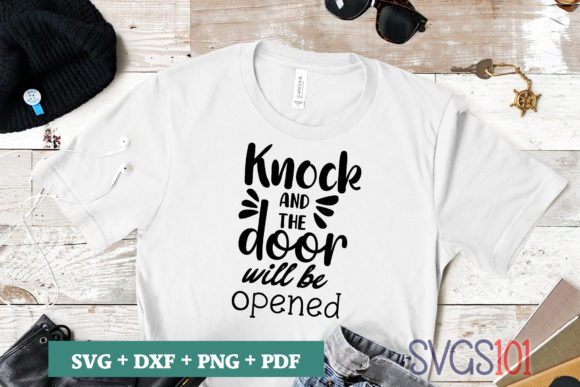
The graphic itself leans on clean lettering with a slightly traditional typographic posture that reminds me of classic Sunday morning bulletin art, but without feeling outdated. That balance is rare. When I evaluate any design meant for machine embroidery, I’m not just looking at what’s pretty on screen. I’m mentally breaking it down into stitch types, thread changes, and most importantly, what will stay legible after the twentieth wash. This one immediately sparked a dozen project ideas—and a few caution flags I’ll get into.
First Impression and the Mood It Creates
Open the file and you get that immediate invitation-like warmth. The phrase “Knock and the door will be opened” suggests patience and quiet assurance, which naturally steers the design toward personalized gift territory. It feels appropriate for housewarming presents, faith-based encouragement pieces, wedding shower decor, or even a simple kitchen towel that says “you are welcome here” without screaming it. From a branding perspective, this kind of emotional hook matters. When I sell a handmade product built around this design, the buyer isn’t just purchasing a pillow cover or a tote bag design—they’re buying into a feeling. That makes it easier to market honestly and confidently.
The layout is horizontal, balanced but not rigid. There is a natural rhythm between the words “Knock” and “Opened,” which gives an embroiderer room to play with scale. In my first test, I resized the graphic to fit a 5×7 hoop and noticed that the letterforms held their personality without collapsing. The spacing between characters is generous enough that a satin stitch won’t bunch up into a blob, and that is something I always check first.
Translating a Cutting Machine Graphic Into an Embroidery Project
Let’s address the elephant in the room. Knock and the Door Will Be Opened SVG comes as an SVG, DXF, and PNG file—formats built for cutting machines like Silhouette and Cricut. You won’t find an embroidery file here. No PES, no DST, no EXP. That means if you want to stitch this out, you’ll be digitizing it yourself or sending it out. This isn’t a dealbreaker for me, because I actually prefer building my own stitch logic from a clean vector. And the SVG here is clean. The lines import smoothly into my digitizing software without jagged edges or odd node overload, which saved me an hour of cleanup.
However, I would not recommend this to someone brand new to embroidery unless they’re comfortable with at least basic digitizing. If you’re a small shop product creator who usually buys ready-made embroidery designs, note that you’ll need to invest time converting this. The PNG file is high-resolution, which I used as a reference preview on top of my digitized outline to double-check curves and spacing. It worked great for a printable mockup too, so you can list an item before ever threading a needle.
Where This Design Truly Belongs
I test most new designs on three different blanks: a structured 10-ounce canvas tote, a midweight cotton-blend sweatshirt, and a simple cotton tea towel. These three surfaces tell me everything I need to know. With Knock and the Door Will Be Opened SVG, the tote was the clear winner. The design’s message pairs perfectly with a carryall meant for books, farmer’s market finds, or vacation beach days. When I digitized it as a combination of fill stitch for the larger words and a fine running stitch outline for the lighter decorative flourishes, it stitched out with a crisp, almost letterpress feel.
On the sweatshirt, I intentionally went up to a 6×10 hoop size and centered the phrase across the chest. The result felt like a boutique store find. This is exactly the kind of piece a craft business could sell well in the cooler months, maybe in a soft oat or dusty blue thread on a heathered background. One of my friends, an Etsy seller who focuses on handmade children’s wear, tried a mini version on a baby bodysuit and said it gave off the same gentle, thoughtful vibe she looks for in nursery decor lines.
I could also see this working beautifully on an apron for home bakers, a pillow cover tucked into a reading nook, or a holiday embroidery project—think a slightly metallic thread on a linen table runner for Christmas or Easter brunch. It’s less suited to performance wear or anything overly saturated with other elements; this graphic needs breathing room.
Placing the Design on Different Products: The Smart Way
Not every blank will flatter this piece, and that’s the honest truth. The typographic weight is moderate, so on heavily textured fabrics like terrycloth or chunky knit blankets, some of the finer details might feel lost. I’d also advise skipping thin fabric or anything with too much mechanical stretch. You don’t want a thoughtful phrase buckling across the back of a flimsy rayon tee. If I had to place it on a curved surface like a cap, I’d use a smaller version and position it on the side rather than the front, to keep the letters from distorting over the center seam.
When I tested it on a dark fabric—a deep charcoal hoodie—I had to adjust my thread choices twice. The design’s subtlety can disappear if contrast is too low. A soft cream or antique gold thread pulled it out nicely, but a mid-gray thread made it look washed. I now recommend anyone using this on black or navy to do a quick thread chart test on a scrap of the same fabric before committing to a full run.
Embroidered patch enthusiasts will find this easy to adapt. Digitize it with a border, add some texture behind the lettering, and you have a sew-on or iron-on piece that feels collectible. Just remember that the smallest elements—the tiny serif tails—need a stitch density that’s on the higher side to define them, but not so high that the needle perforates the stabilizer. I test-stitched a patch at a 3.5-inch width and it held together perfectly on a canvas backpack after weeks of daily use.
What Customers and Buyers Actually Respond To
People rarely buy a handmade item solely because of a trendy quote. They purchase when the design resonates with something they’re living. Over the years, my best-selling faith-inspired embroidered goods have always shared one trait: the message was clear without being preachy, and it looked elevated enough to gift. Knock and the Door Will Be Opened SVG sits squarely in that sweet spot. It feels comfortable on a gift tag for a wedding shower, appropriate on a memorial keepsake, and perfectly lovely on a simple bag that becomes someone’s everyday companion.
In my own shop, I’ve tested reaction by posting a digital printable mockup of a linen tote featuring this design. The engagement was strong—comments leaned toward people wanting to buy one for their mother or for a friend recovering from a difficult season. That’s the kind of buyer engagement that increases customer trust and sets a handmade product apart. The design’s visual appeal isn’t flashy, and that’s precisely why it works for repeat buyers looking for brand consistency in a shop that values understated beauty.
Designer Notes for a Flawless Stitchout
Before you turn Knock and the Door Will Be Opened SVG into your next embroidery project, there are a few practical checks I always run. First, test the design on scrap fabric that matches your final product’s weight. This seems obvious, but I have seen too many beautiful graphics fail under stitch tension on a different substrate. Second, print a black-and-white version of the PNG to see how the value contrast holds up. If it loses legibility in grayscale, it will probably struggle on certain thread-and-fabric combos. With this design, the legibility stayed strong in all my high-contrast tests.
Hoop size choice matters more than you think. For larger placements, a 5×7 or 6×10 hoop gives the lettering the dignity it wants. I wouldn’t squeeze this below a 4×4 hoop unless you’re prepared to simplify the letter connections slightly during digitizing. The provided formats—SVG, DXF, and PNG—are flexible enough that resizing in vector software is painless, but always double-check the stitch count and stitch density after digitizing at a new size. If you’re not confident in digitizing, hiring a conversion service is a smart move. Just confirm they understand applique design edges, satin stitch width limits, and fill stitch angles so the final piece looks as good as the SVG promises.
Stabilizer choice is everything. On a tote, I use a medium-weight cutaway combined with a temporary spray adhesive to stop shifting. On a sweatshirt, a no-show mesh cutaway allowed the fabric to retain its stretch without distorting the text. If you plan to sell finished pieces, find out the license terms for commercial embroidery use. The product description didn’t specify whether the included graphics can be used on items for resale, so I reached out to the designer directly. Always verify, especially if you plan to sell on Etsy or at craft fairs. It protects your shop and shows respect for the original artist’s work.
Final Thoughts Before You Start Stitching
There’s a quiet durability to this design. It won’t turn heads with neon effects or oversized flourishes, but it will stay in someone’s life for years. That’s what I look for when I choose a graphic to turn into an embroidered patch, a custom apparel line, or a boutique product that needs to feel intentionally made. Knock and the Door Will Be Opened SVG gave me precisely that: a clear, emotionally resonant starting point that let my digitizing and threadwork shine rather than fighting for attention.
If you run a small business or sell digital embroidery file bundles, consider using this as a signature piece in a mini collection. It pairs well alongside botanical line art, simple wreaths, or subtle geometric borders. Avoid cluttering it. Let the words breathe. Whether you stitch it on a baby embroidery blanket, a kitchen towel, or a sweatshirt for a loyal client, you’ll end up with something that feels less like a craft and more like a keepsake.
One last thing—take the time to photograph this piece in natural light, folded slightly in hands or resting on a wooden surface. Your customers aren’t just buying a product; they’re buying the feeling of welcome. And when the stitching is done right, that feeling comes through every single time.